
“As far as possible, leaders design personalised pathways for pupils, especially at A level, through subject choices which match pupils’ aptitudes and interests.”
ISI, April 2025
Sixth Form Academic
At Thames there is a strategic focus on subjects that open doors to a range of degree choices and other options.
We recognise that students will take different pathways post-18 and we help and prepare them accordingly. Some students will choose the more traditional university route while others will apply to foundation courses or degree apprenticeships, and some may go straight into the workplace. Subject combinations are highly flexible and, as far as possible, these are tailored to the aspirations of each individual student. Tutorial sized classes are taught by highly skilled subject specialists with extensive experience of teaching A level. Many bring industry experience and expertise into the classroom.
Our 2026 leavers achieved 52% of A level grades at A*-A and 83% at A*-B.
Almost all subjects that ran for this cohort saw top A*/A grades including Mathematics, Further Mathematics, Physics, English Literature, History, Economics, Spanish, Art and 3D Design.
Recent destinations have included Exeter, Bath, Cardiff, Swansea, Manchester, Sheffield, Queen Mary University of London, Surrey, Essex, Kingston, Nottingham Trent, Goldsmiths and Oxford Brookes along with City & Guilds Art School. Some students move onto sought after degree apprenticeships whilst others find work placements related to their chosen careers.
Recent courses have included Architecture, Engineering, Mathematics, Computer Science, Product Design, Biomedical Sciences, Accounting, Economics & Financial Mathematics, Psychology, Public Health and International Politics & Spanish.
Art and 3D Design are particularly strong with 75% of grades at A*/A and a number of students receiving unconditional university offers. The crossover between Maths, Physics and 3D Design has been a highly successful combination.

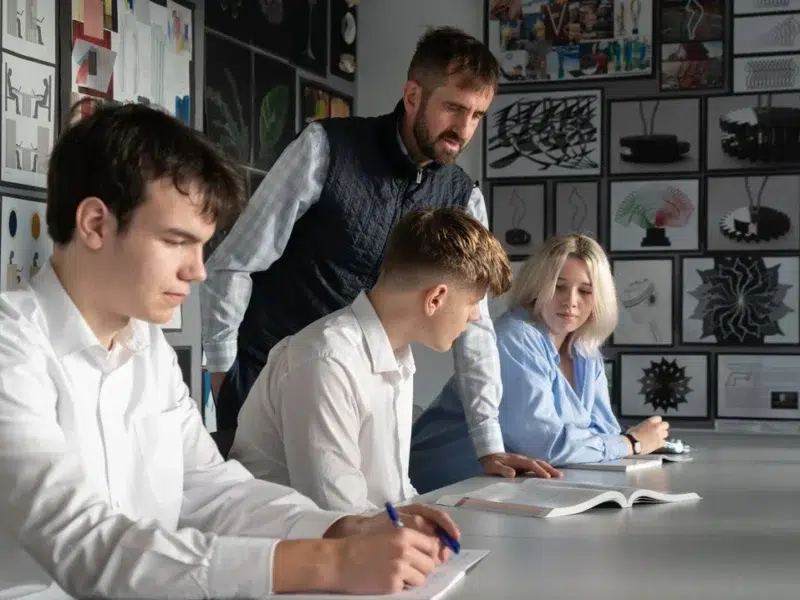
Students benefit from a brand new state of the art learning environment which includes: science laboratories designed for A Levels, a theatre with top of the range sound and lighting, design and STEAM workshops equipped with laser cutter, 3D printing, pressure former and mechanical and hand tools and art studios with a kiln. Students have exclusive use of a sixth form common room, independent study centre and seminar rooms.
Sixth form students at Thames sit three or four A Levels alongside full involvement in the wider activities offered. Subject specific trips enrich the A Level programme, making the most of the resources that London has to offer.
To study A Level subjects, students should have at least grade 7s at GCSE in those subjects as well as good passes in at least six other subjects including English and Maths.
Subjects are subject to minimum numbers and will reflect the range of interests of each cohort of students. This means that not all subjects will run in a given year.

Three-Dimensional Design A level is an exciting and creative course that helps facilitate varied careers in design and the wider visual arts. 80% of pupils completing the course have been offered places on related degree courses, including furniture and product design as well as several who have gone on to study architecture degrees, engineering courses and a related degree apprenticeship. During the course, students hear from a wide range of visiting designers who help them understand these varied career pathways. We also undertake relevant trips and practical workshops from visiting the London Design Festival to popular jewellery making workshops.
A series of varied briefs help students develop a broad skill base that includes traditional processes such as steam bending wood and joint making in the Arts and Crafts Chair project, to use of cutting edge computer aided design and manufacturing processes in making Bluetooth Speakers. Other Year 12 projects include an architectural “Modernist Escape” project, consideration of sustainable design in the Mycelium Design project and exploration of structural engineering principles through the Tensegrity project. Throughout these projects, students learn about key designers and ideas that have shaped the evolution of design over the past 150 years.
Year 13 builds on this foundation as students develop increasingly refined and ambitious work.
In doing so, we are proud to say that 80% of students who have completed the Three Dimensional Design A Level at Thames achieved A*-A, and 100% were awarded A*-B.
A level Art is largely studio based and each student has their own personal space in which to work in a dedicated 6th form studio. Students are encouraged to study a wide variety of artists’ work and to develop their work according to their own ideas. They learn how to use a variety of media to a very high level. Students visit galleries in London and respond to the work of established artists with sophistication.
In the last two years 50% of grades have been at A* and 100% A*-B. Students have gained places at Kingston University, Nottingham Trent University and Loughborough University to study Architecture, Kingston University to study Product and Furniture Design and City and Guilds Foundation Course. The student who completed her Foundation Course at City and Guilds has taken up a place at Goldsmiths College, University of London
Biology A Level increases students’ knowledge and understanding of the study of living organisms and factors that may affect them. While developing their technical and practical skills, the course is designed to help students understand how decisions are made regarding scientific issues, and how the sciences contribute to the success of society as a whole. The Biology laboratory has been designed with A Levels in mind.
Biology A Level gives students career options including medicine, psychology, marine biology, biomedical science, sports science, nature conservation, pharmacology, environmental science and soil science.
Chemistry A Level enhances students’ knowledge and understanding of the properties of matter and how atoms, molecules and compounds interact to form the endless diversity of substances that make up our world. While developing their technical and practical skills, the course is designed to help students understand how decisions are made regarding scientific issues, and how the sciences contribute to the success of society as a whole. The Chemistry laboratory has been designed with A Levels in mind.
A Level Chemistry is a requirement for almost all university courses in medicine and veterinary science and many other science-related and STEM subjects.
Facilitated by highly knowledgeable teachers, students explore the three A Level components in an exciting and innovative way. Practical workshops include Theatre Practitioners such as Meisner, Utta Hagan, Berkoff, Artaud, Stanislavski, Brecht and more. (With Uta Hagen included on the approved practitioner list in 2025 due to exploration completed at Thames for our first A-Level cohort). We explore the set texts of Colder Than Here and Hedda Gabler for the written exam in year 13. An in-depth practical exploration of these texts enables deep understanding of the concepts and interpretations.
Students are encouraged to visit the theatre often to develop their love of the theatre and critical / analytical skills, and personalised, challenging lessons equip pupils with the skills necessary to succeed not only in their exams, but if they want to pursue a career in the industry.
Economics A Level gives a strong grounding in both micro- and macro-economics, and applies both to the modern world, making it topical and engaging. It helps students develop the skills, knowledge and understanding that will enable them to think and reason as economists. No prior learning or knowledge of economics is required for taking A Level Economics. Economics combines the benefits of both science and arts courses, with students having to write extensively as well as utilising their numeracy skills. Economics provides a good grounding for later life and can lead to careers in finance, banking, stock broking, law, politics and journalism.
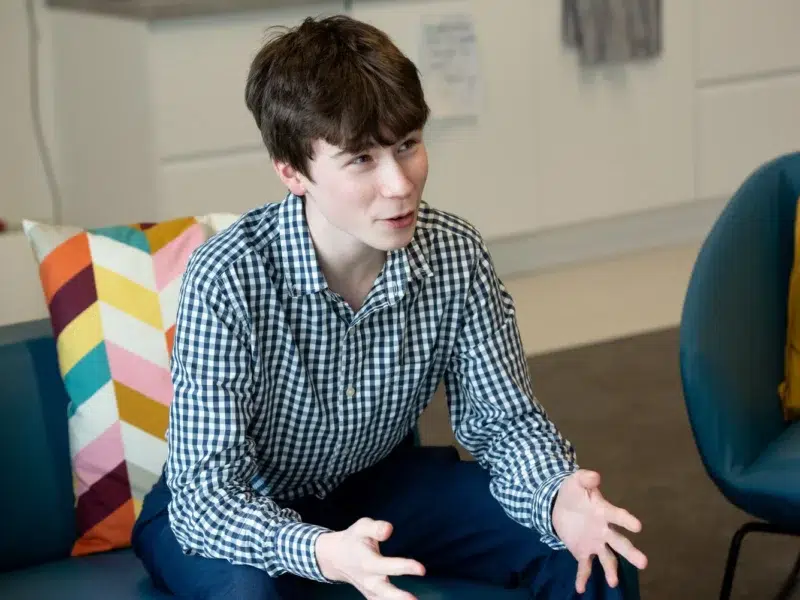
The English Literature A Level at Thames follows the OCR syllabus, which rigorously challenges our students to think critically, and to develop an assertive literary angle. We tackle a range of texts which explore some of the deepest aspects of the human heart and society: Hamlet’s existential questioning; George Orwell’s scathing political satire, Nineteen Eighty Four; Rossetti’s Christian faith expressed in her poetry, for example. Through the study of other texts by authors from diverse backgrounds they develop the highly transferable skills of sustained research and critical evaluation through different literary lenses, while strengthening their own position and critique.
Contextual influences past and present are examined and woven into arguments, ensuring broad understanding and well positioned literary discussion. Thames English Literature pupils end year 13 confidently capable beyond literary debate: they leave with a firm emergent voice and a deep understanding of how to ‘read’ literature.
The Extended Project Qualification is worth 50% of an A Level but goes beyond A Level in terms of the research and skills involved and is a good preparation for university. It is recommended for students who are thriving in their three A Levels as it is a challenging step up.
The Extended Project will develop and extend from one or more of the student’s study areas and/or from an area of personal interest or activity outside their main programme of study. To complete the EPQ requires in total 120 hours project work in which a student can pursue their own line of enquiry and interest, having agreed their project with their supervisor.
A Level French takes students from confident communicators to true linguists—reading literature, debating ideas, and engaging with the culture and politics of the Francophone world with real sophistication.
Following the AQA specification, our students explore themes from France’s political landscape—including Maréchal Pétain’s Vichy regime, the Resistance movement, and modern political tensions around union power and immigration—to social issues such as life for the marginalised, evolving family structures, and the impact of the cyber-society. Students study books such as Mathieu Kassovitz’s La Haine in depth, developing the analytical precision to write and speak about complex ideas with real nuance.
Speaking is at the heart of the course. Students build towards the AQA oral exam through regular debate and a rich Independent Research Project discussion bank, while translation and essay writing sharpen accuracy in equal measure.
Beyond the exam, A Level French is a genuine passport—to study, work and travel across nearly 30 Francophone countries, and to a global language that opens doors in law, business, diplomacy, international relations, journalism and beyond.
Geography is a subject that links to many others such as economics, history and sociology, or biology, chemistry and maths. A student with a curiosity about the world around them – the patterns they see and the reasons for them, as well as the relationship between environment and society – is almost bound to do well. Geography students are in high demand in all areas of employment because of their training in data analysis and critical thinking. Geography provides an excellent skill basis for the majority of university degrees.
A Level History provides an ideal curriculum for students to ignite and engage their passions and interests. They will develop critical and reflective thinking, which they demonstrate in an essay exploring a topic of their own choosing, creating independent learners, critical thinkers and decision-makers. History is a highly respected academic subject and its strong emphasis on structured argument and source interrogation makes it an ideal preparation for university-level study in humanities, law, and social sciences.
The A Level course covers the periods of the French Revolution and Napoleon, Britain, 1930-1997 and Civil Rights in the USA along with an independent research essay where students select a historical debate of their choice, evaluating primary sources and conflicting secondary interpretations to construct a sustained argument.

A passion for mathematics lies at the heart of our teaching. Maths is viewed as a powerful language that unlocks the world around us. Our approach builds secure foundations, sharp problem-solving skills, and the confidence to tackle complex, unfamiliar challenges with independence. By bringing the subject to life in this way, we spark a deep curiosity that leads many of our students to choose Mathematics at A Level.
Throughout our A Level Mathematics course, students master structured logical reasoning, mathematical proof, and real-world problem solving. Alongside standard A Level scientific calculators, we provide guidance to help students explore graphing software and digital tools that deepen conceptual understanding. The curriculum covers Pure Mathematics—including calculus, trigonometry, vectors, sequences, and series—as well as Applied Mathematics, which encompasses Statistics (data analysis and probability) and Mechanics (forces, motion, and real-world modeling).
For ambitious students seeking an extra challenge, we also offer Further Mathematics at A Level. This course expands into fascinating advanced topics such as Complex Numbers, Matrices, Advanced Calculus, and Differential Equations. It serves as an essential prerequisite for degree-level Maths and significantly strengthens university applications for competitive fields like Engineering, Computer Science, Physics, and Economics.
Our strong culture of support and high aspiration ensures every student achieves remarkable progress, leaving with highly sought-after skills for top universities and future careers.
A Level Music is offered to provide an even more in-depth approach to musical understanding, critical-thinking and appreciation. Students perform a free choice recital of 8-minutes duration on their choice of instrument or voice. They also compose a single piece of around 4-minutes duration utilising the software available in the department. Students also complete a Technical Study, which involves 4-part harmonisation of an 18th century hymn tune (chorale), following the stylistic principles of J.S. Bach. The listening paper assesses musical and contextual understanding of a wide-range of musical styles and genres from the classical tradition, popular music and jazz, music for film and TV, and examples of musical fusion.
Pupils are encouraged to participate in as many co-curricular activities as possible including the school choir, instrumental ensemble, jazz ensemble, percussion ensemble as well as small groups, and student-led ensembles. The annual school production is a focal point of the school year, and students across the school are encouraged to participate both on-stage and off. We have a team of specialist visiting music teachers who offer private tuition in a variety of musical instruments including piano, drums, guitar, violin, flute, clarinet, saxophone, trumpet, trombone and voice.
Physics A Level enhances students’ knowledge and understanding of the nature, and properties, of matter and energy. While developing their technical and practical skills, the course is designed to help students understand how decisions are made regarding scientific issues, and how the sciences contribute to the success of society as a whole. Physics and Engineering are popular degree subjects and Physics graduates are sought by oil and energy companies, transport companies, science communication roles and as Physics teachers.
A Level Psychology is the scientific study of the mind and behaviour, exploring why people behave the way they do and whether behaviour is influenced more by nature or nurture. It is an applied, real-world science that investigates how behaviour can be predicted, explained and changed. It includes topics such as Social Influence, involving conformity and obedience; Memory, including the reliability of eyewitness testimony; Biopsychology, including studying the brain; and Clinical Psychology, exploring the causes of phobias, depression and OCD. Psychology A Level is regarded as scientific because we seek to gather empirical support for our theories of behaviour, which means a big part of the course involves research methods where we analyse and evaluate experimental designs.
A Level Spanish takes students from confident communicators to true linguists – reading literature, debating ideas, and engaging with the culture and politics of the Spanish-speaking world with real sophistication.
Following the AQA specification , our students explore themes from Spain’s political landscape – including Franco’s dictatorship and the Ley de Memoria Democrática – to social issues such as youth unemployment across Latin America, family structures and the cult of celebrity in Los Ídolos. Students study Almodóvar’s Volver in depth, developing the analytical precision to write and speak about complex ideas with real nuance.
Speaking is at the heart of the course. Students build towards the AQA oral exam through regular debate and a rich Independent Research Project discussion bank, while translation and essay writing sharpen accuracy in equal measure.
Our results speak for themselves: our students consistently achieve top grades and outstanding value-added scores, reflecting the rigour and care built into every unit.
Beyond the exam, A Level Spanish is a genuine passport – to study, work and travel across 20 countries, and to a language that opens doors in law, business, diplomacy, journalism and beyond.
Thames launched A level Textiles in 2026 following the success of GCSE. The Textiles facilities are excellent, and sixth form students have access to a dedicated Textiles study room.
In Year 12 students work on a range of hands-on projects where they deepen their knowledge of Textile processes and work to create high quality, sophisticated work inspired by a range of themes. In Year 13 students develop personal work with one-to-one teacher support. Small classes mean each student can create a unique and individual project with guidance around their specific area of research.
The department has an excellent range of sewing machines, heat presses and new screen printing facilities allowing for great experimentation. Students explore a wide range of processes such as screen printing, surface embellishment, dyeing, weaving, paper making, heat transfer sublimation, fabric manipulation and digital print.
Students have the opportunity to attend trips such as visiting London Design Festival and benefit from a range of visiting speakers relevant to fashion and interiors. Studying Textiles at A level provides a strong base for exploring creative courses at university level and equips students with both technical skills and transferable skills such as problem solving and research.