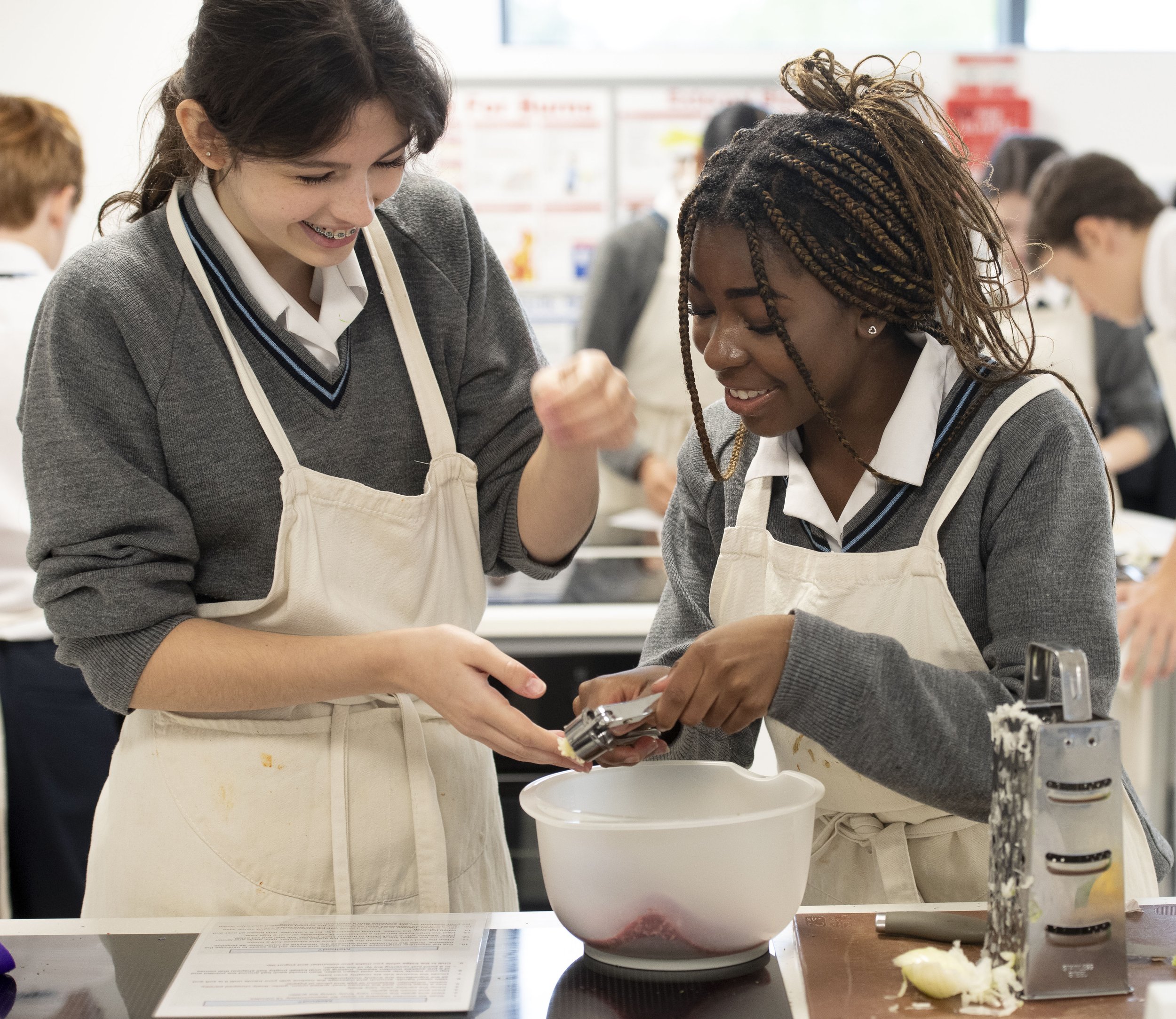
“A well-judged range of teaching strategies is used by teachers. These enhance pupils’ engagement and develop their critical thinking skills.”
ISI, April 2025
Academic
Inspired to aim high
Academic
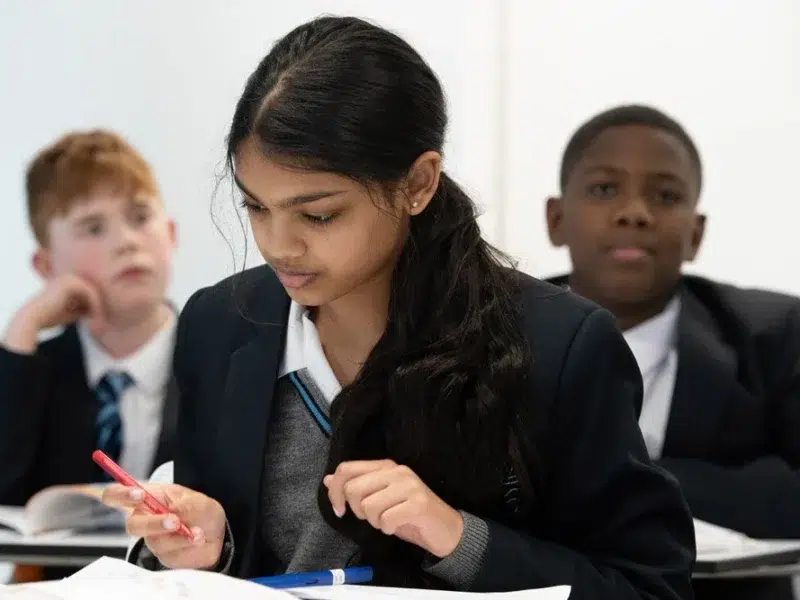
Staff are passionate about their subjects, bringing academic rigour to their teaching. This leads to academic challenge that inspires pupils to aim as high as possible and not to limit themselves. Underlying our philosophy of teaching is the importance of valuing every individual. Genuinely small classes enable teachers to build rapport with each pupil and nurture their gifts and talents. As pupils grow in confidence and encourage each other in the classroom, we find their appetite for academic study increases.
Our most academically able pupils achieve top grades across many subjects whereas others who are more gifted visually or in performance may take multiple arts based GCSEs to hone the skills that will open the doors to their aspired careers. Past GCSE pupils have secured places at London’s most prestigious sixth forms whilst A level students often progress to Russell Group Universities or highly sought after arts colleges.
It is not either/or at Thames
The highly flexible option blocking at GCSE and A level means that our pupils pursue subject combinations which will open doors to their future career choices. This may mean taking a wide range of subjects at GCSE including separate sciences, visual and performing arts, languages and humanities allowing for plenty of cross over. Equally, other pupils are able focus on achieving excellence in a smaller range of choices.
Our pupils achieve highly at both GCSE and A Level. In 2026, 40% of pupils achieved at least five 9-7 grades at GCSE with many achieving a grade or more higher than their baseline predictions. At A Level, 52% of grades were A*/A and 83% A*/B.
Since starting their journey at Thames, a significant number have achieved first class honours degrees and many have gone on to enjoy a wide range of careers including law, engineering, architecture and medicine as well as in the creative arts.
“Teachers build highly positive relationships with pupils across all year groups, fostering a collaborative and purposeful learning environment where pupils take increasing leadership of their learning.”
ISI, April 2025
Pupils take both English Language and English Literature GCSEs and many go on to study English Literature at A level. Texts are carefully chosen to provide diverse and exciting challenges. Lively debate is encouraged in class as is experimentation in a wide range of writing styles.
English empowers pupils with the spoken, analytical and literary skills they need, both to secure their places in the world of work and to express themselves as individuals and leaders. Critical reading is crucial when reading digital and AI generated media: to enhance this wider reading is encouraged and opportunities are provided for Socratic discussion, public speaking and debate. Pupils participate in national competitions such as the Orwell Youth Prize, Poetry by Heart and the Independent Schools Association creative writing competitions and debating contests.
In the study of poetry, prose, drama and transactional texts ‘open the doors’ of literature. Pupils are taught to engage with different themes, contexts, adaptations and styles. The analysis of figurative language, structure and form remain central to the exploration of all types of texts. Precisely targeted language lessons at GCSE focus on the art of the sentence or short story, enabling pupils to craft concise pieces of writing.
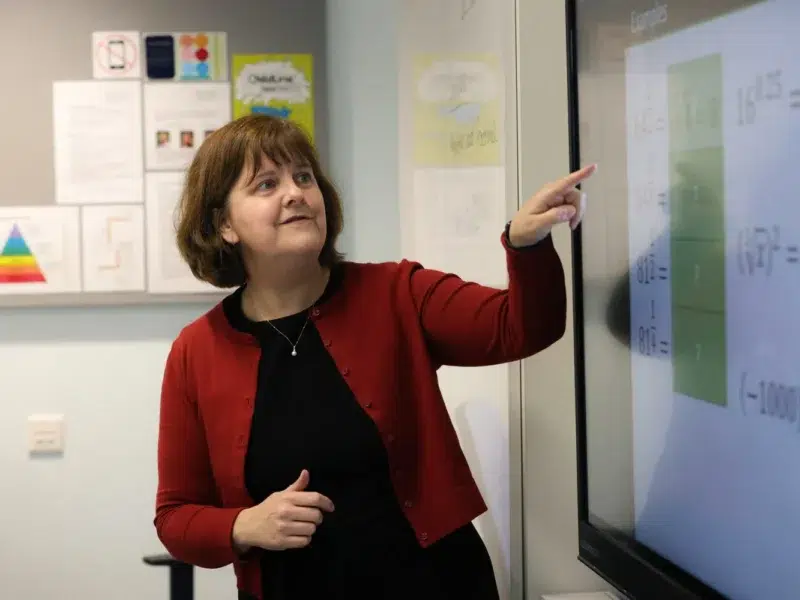
From Year 7 onwards, pupils are encouraged to understand the mathematics behind a method rather than simply memorising procedures. Discussion, problem-solving, puzzles and purposeful use of technology all contribute to developing deeper mathematical thinking.
Pupils follow the Edexcel International GCSE Mathematics course, chosen for the breadth and depth of understanding it develops and the strong foundation it provides for further study. The course explores familiar concepts in greater depth and introduces more advanced ideas, providing valuable preparation for students who choose to continue with Mathematics at A Level.
Pupils are supported at every stage, with targeted intervention and after-school clinics where needed, alongside opportunities for pupils to extend their mathematical thinking beyond the core curriculum. Pupils across the school take part in the UKMT Junior, Intermediate and Senior Mathematical Challenges, encouraging them to think creatively and apply mathematical ideas in new and demanding situations. Many achieve Bronze, Silver and Gold certificates, with some qualifying for the Kangaroo follow-on rounds, where they have also achieved Gold awards. The AQA Level 2 Certificate in Further Mathematics is offered to the most able mathematicians in Year 11.
Through this approach, pupils build a secure mathematical foundation, strong problem-solving skills and the confidence to think independently enabling them to solve unfamiliar problems and persevere when solutions are not immediately obvious.
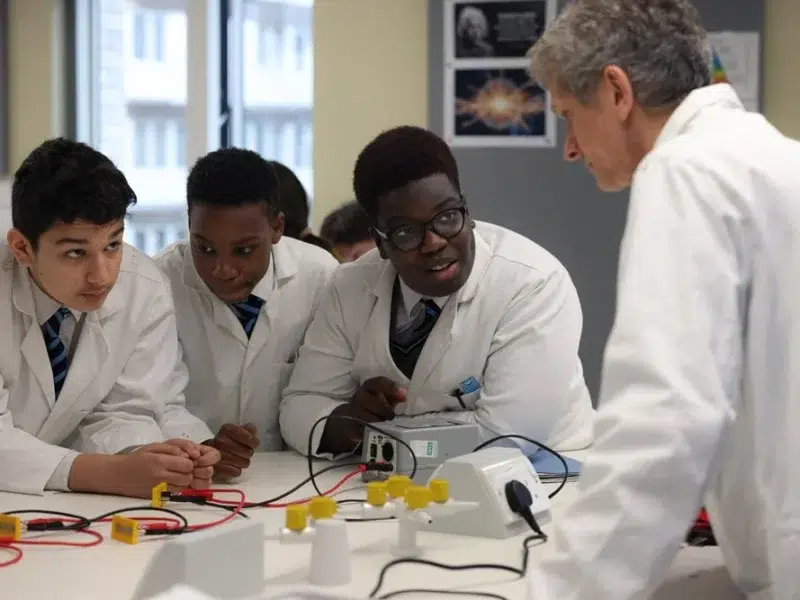
Led by experienced teachers a dynamic approach trades passive listening for hands-on discovery and academic rigor. State of the art specialist science laboratories and classrooms with demo areas enable teachers to deliver a curriculum rich in practical investigations. Pupils master core concepts across Biology, Chemistry, and Physics, developing the critical thinking, analytical, and problem-solving skills necessary to excel in the IGCSE examinations and beyond.
Pupils study all three sciences in Years 7,8 and 9 after which they are offered the Edxcel IGCSE courses in Biology, Chemistry and Physics. Pupils can choose to take just one of these sciences, two sciences or all three sciences depending on their interests and ambitions. The Edexcel IGCSE represents a very solid preparation for A Level as many of our pupils who go onto study science A level testify.
Learning extends beyond the textbook. Every Friday, our vibrant STEM Club dives into the fascinating mechanics of life, offering students hands-on dissections of insects, crustaceans, and vertebrates like sea bass. During Science Week, our young scientists tackle real-world engineering and scientific challenges in prestigious national STEM and ISA (Independent Schools Association) competitions. Among more than 42,000 national participants over the past three years, our ambitious pupils have earned a remarkable 6 Silver medals and 1 Gold medal in the highly competitive British Biology and Chemistry Olympiads, demonstrating extraordinary mastery alongside the top young scientists nationwide.
Whether dissecting specimens, synthesising compounds in the lab, or designing competition-winning solutions, we nurture the innovators, researchers, and scientific leaders of tomorrow.
History offers pupils a brilliant lens through which to view the past by following a broadly chronological curriculum. In year 7, pupils explore pre-historic, Celtic, Roman, and medieval History, beginning to use the tools of research and presentation. In year 8, they encounter the religious rollercoaster of the sixteenth century before understanding the conditions that created a civil war in England and contributed to the rise of Parliament. The final topics sensitively engage them with the history of the British Empire and involvement in the transatlantic slave trade. Year 9 considers the most modern History, beginning in the early twentieth century with the tragedy of the Titanic and the fight for women’s suffrage, continuing on to causes of and experiences in the First World War, key turning points in the Second World War and a local History study, before finishing on studies of the Holocaust and fight for civil rights. The local History study in particular – the impact of the Second World War in Battersea – shows pupils that History happened in our local area and not just ‘out there’; pupils’ time at Thames should encourage them to see History beyond the four walls of the classroom. Along the way, they will develop skills in analysis, explanation, and evaluation as they engage with concepts of source evidence, causation and consequence, change and continuity, and significance.
At GCSE, Thames offers a breadth study on the history of migrants in Britain from c. 800 to the present day, a rich social history in today’s multicultural context. Pupils then examine Weimar and Nazi Germany, c. 1918-39, a poignant case study in how a nation can turn from a democracy to a dictatorship in a short space of time. This is followed by Superpower relations and the Cold War, c. 1941-91, and a British depth study on Early Elizabethan England, c. 1558-88. Pupils build skills as they work on the explanation of concepts and analysis and evaluation of sources and interpretations.
Geography stimulates an interest in and a sense of wonder about places, helping young people make sense of a complex and dynamically changing world. It explains how places and landscapes are formed, how people and their environment interact, and how a diverse range of economies, societies and environments are interconnected. Pupils develop a broad range of skills and we aim to ensure they complete at least one fieldwork investigation in each school year.
The Cambridge IGCSE Geography course gives pupils a solid grounding in all traditional topics in Geography, as well as the chance to demonstrate their understanding of map reading and completing a geographical investigation.
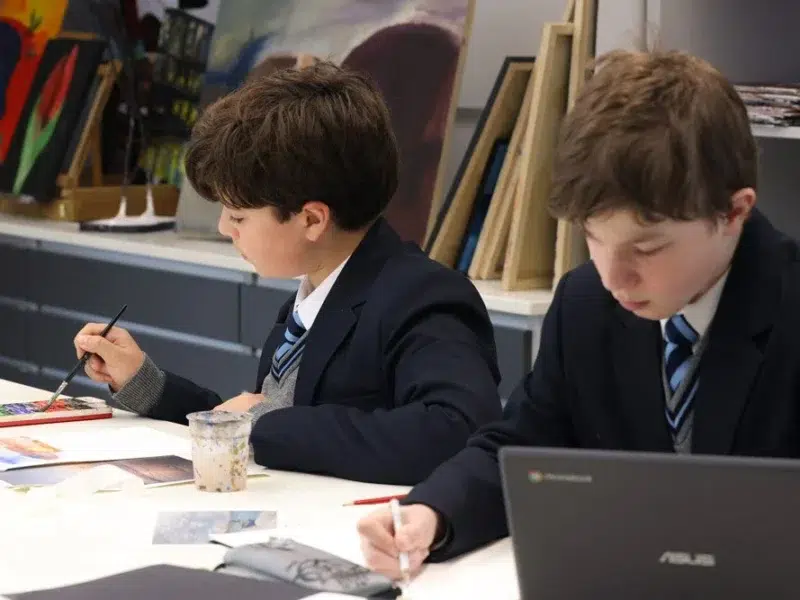
At Thames pupils are taught to engage positively with other people. Learning to listen, seeking to understand, and respecting others’ faiths and worldviews is essential. The Key Stage 3 curriculum prepares pupils for adult life by teaching them about the major world religions.
Religious Studies GCSE is taken in Year 10 and focuses on Christianity, Judaism and Christian ethics.
Business Studies introduces the dynamic, fast-paced world of commerce, developing the practical skills and theoretical knowledge to understand how organizations operate, adapt, and succeed in a global economy. Following the Cambridge IGCSE Business Studies syllabus, this two-year course from Year 10 provides a hands-on exploration of the real decisions facing modern entrepreneurs and global corporations alike. Topics include Business Activity & Ownership, People in Business, Marketing, Operations Management, Financial Information & Decisions.
Business Studies is far more than just theory; it is a springboard for real-world application. It develops vital analytical, problem-solving, and decision-making skills as pupils learn to evaluate actual business case studies and tackle contemporary economic challenges. Whether pupils dream of launching their own startup, pursuing a career in finance, marketing, management, or law, or simply want to understand the economic forces shaping daily life, Business Studies builds an solid foundation for higher education and future professional success.
It provides a base from which pupils can pursue Business Studies or Economics at A level as well as applying their knowledge to self-employment and business leadership in the future.
In Year 7 pupils study either Spanish or French. As they move through Years 8 and 9 gifted linguists have the opportunity to add the second language both of which can be studied at GCSE and onto A Level. An introduction to Mandarin and Chinese culture is taught as part of life skills in Year 9.
From Key Stage 3 through to GCSE, lessons are fast-paced, immersive and fun – blending games, music, authentic video, role-play and real cultural content with rigorous grammar teaching. Beyond the classroom, students get hands-on with culture through cooking workshops, making everything from Spanish tortilla to French crêpes and Chinese dumplings, and our Mandarin students head out on a trip to Chinatown to see the language and culture come alive on the streets.
Pupils don’t just memorise vocabulary; they learn to think in another language, building the confidence to hold conversations, understand native speakers and express themselves with growing accuracy across speaking, listening, reading and writing. Learning a language rewires how they see the world – sharpening memory, boosting problem-solving, and opening their eyes to cultures beyond their own.
Bilingual pupils may take GCSEs in their second language in Year 8, 9 or 10. These have recently included Russian, Modern Greek, Mandarin and Japanese.
Overseas trips give pupils the opportunity to practise using their language skills and broaden their cultural understanding. Past language trips include Iceland, Madrid, Barcelona, Malaga, Naples and Paris.
The Year 7 and 8 curriculum focuses on hardware, software, the Internet, AI, e-safety, digital art, and coding in Scratch and Python. Pupils who choose the subject in Year 9 dig deeper into Python programming and begin to learn the fundamentals of Boolean logic, data representation, computer architecture and cyber security. This serves as a foundation to the IGCSE in Computer Science, which is offered in Years 10 and 11. In 2026 a pupil was awarded first place in the ISA KS4 coding competition. Students are encouraged to think deeply about ethical issues and to develop career-ready skills through projects such as up-cycling used chromebooks, exploring the limits of AI, or developing advanced programming projects for entry into coding competitions.
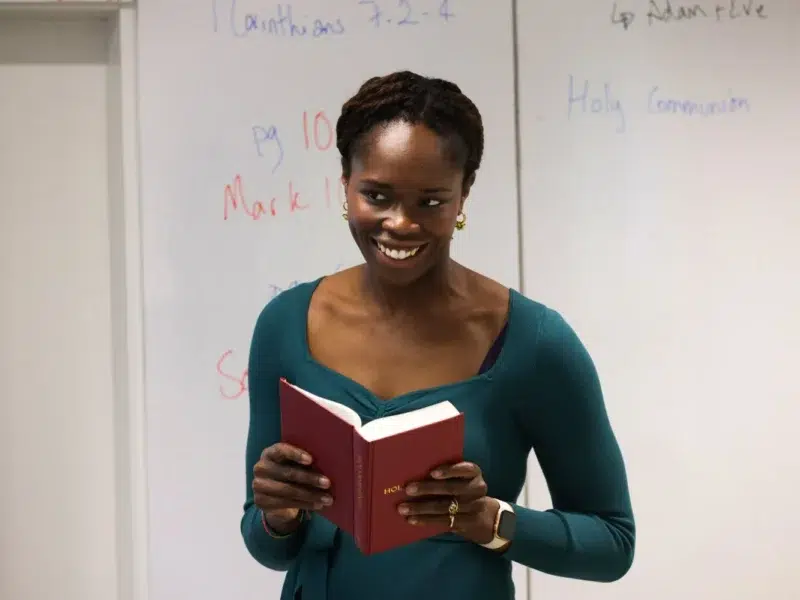
Every pupil is gifted and at Thames we work hard to identify and stretch the gifting of each and every one whether it be in academics, visual and performing arts or on the sports field or several of those areas.
All pupils are inspired to aim as high as possible and not to limit themselves. Academic challenges involve application of higher order thinking skills and an expectation to identify deeper layers of meaning. External competitions in traditional academic subjects, the arts and sport push the most gifted and often result in significant success.
Our most academically able pupils achieve top grades across many subjects whereas others who are more gifted visually or in performance may take multiple arts based GCSEs to hone the skills that will open the doors to their aspired careers. Past GCSE pupils have secured places at London’s most prestigious sixth forms whilst A level students often progress to Russell Group Universities or highly sought after arts colleges.
Our co-curricular programme enables pupils to expand their repertoire of skills and develop individual areas of gifting through internal and external competitions, clubs, societies and the many opportunities within London.
Our excellent inclusion of neurodiverse pupils in a mainstream setting is overseen by a highly qualified team of specialist teachers. The provision is recognised by the Council for the Registration of Teaching Dyslexic Pupils (CReSTeD) whose consultant described Thames as a ‘blueprint’ for all schools aiming to meet the needs of mainstream pupils alongside some with additional learning needs.
Neurodiverse pupils are often highly creative and take full advantage of the exceptionally high standard of our visual and performing arts departments, often opting to complete upto three Art based GCSEs, take part in performances or become key members of our sports teams. Others may be gifted in more traditional academic areas and take advantage of the extension opportunities offered in subjects like Maths, Science, History and English. By providing the correct strategies, neurodiverse pupils achieve highly and inspire others.
Specialist one-to-one tuition can be provided which is in addition to the school fees.
In 2026 42% of all grades were awarded at levels 9-7 and 93% at 9-4.
In particular, 40% of our pupils achieved at least five grades at 9-7, 54% at least three 9-7 grades, and 93% at least one 9-7 grade.
As a school that is not rigorously academically selective, these results reflect the hard work and dedication of our pupils, coupled with the school’s commitment to providing an environment where every pupil can succeed. Small, bespoke classes and a wide range of subjects enable an exceptionally flexible choice of options at GCSE and A level allowing pupils to excel and find the success needed to open doors to their future.
Outstanding individual performances:
Alex 6 grade 9s, 2 grade 8s and 2 grade 7s; Elijah 5 grade 9s and 7 grade 8s; Rebecca 3 grade 9s, 1 grade 8 and 4 grade 7s; Oliver 3 grade 9s, 1 grade 8s and 4 grade 7s; Rufus 2 grade 9s, 1 grade 8, 3 grade 7s and 2 grade 6s; Georgie 2 grade 9s, 3 grade 8s, 3 grade 7s and 2 grade 6s
Subject highlights:
Textile Design 83% 9-7; 3D Design 79% 9-7; Art 77% 9-7; Physics 55% 9-7; Maths 52%, 9-7; Computer Science 50% 9-7; Religious Studies 47% 9-7; Geography 45% 9-7; French 45% 9-7; English Literature 39% 9-7; History 38% 9-7; Spanish 38% 9-7; Further Maths 33% 9-7; Biology 28% 9-7; Chemistry 26% 9-7 and English Language 26% 9-7.
Leavers’ destinations:
Many have stayed for Thames Sixth Form whilst others have moved to a range of destinations. In recent years these have included: Thomas’ College, St Pauls, St Johns Leatherhead, Hurtwood House, MPW, ACM Guildford, Greycoats, Kingston Grammar, Royal Grammar School, Graveney, Esher College, London Screen Academy, The Brit School, St Mary Magdalene, Rhythm Studios, Turing House, Ashcroft Academy and others.